
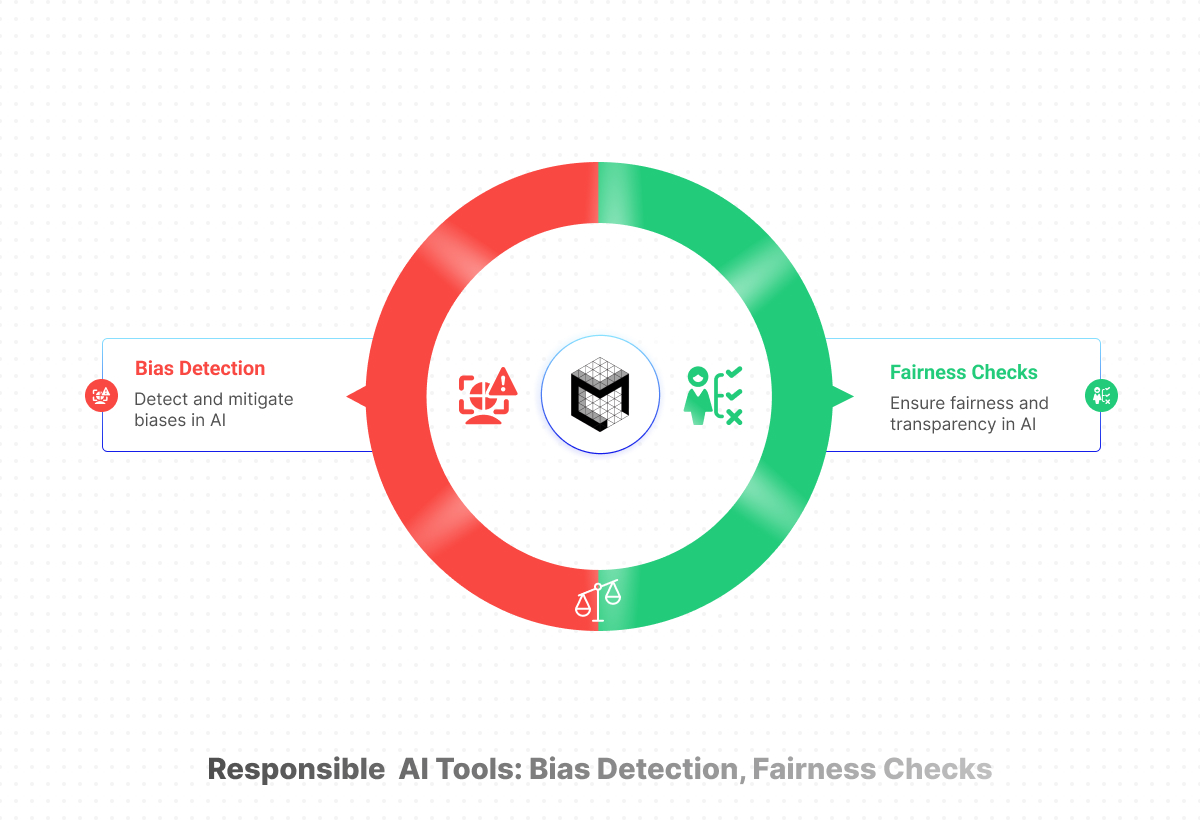
Enterprise AI governance isn't a checkbox exercise - it's an engineering problem. And it's one that most organizations underestimate until an uncontrolled AI output reaches a customer, surfaces in a legal review, or triggers a compliance audit.
The core challenge is that LLMs are generative by nature. They produce outputs probabilistically, which means even a well-designed workflow will occasionally generate content that violates brand guidelines, exceeds the boundaries of compliant disclosure, or simply says something the business would never sanction. In a low-stakes context, this is an annoyance. In a regulated industry, it's a liability.
Guardrails at Multiple Layers
Effective AI governance requires embedding guardrails at multiple layers of the stack. Input validation ensures that user-provided content doesn't manipulate model behavior through injection or adversarial prompting. Output validation applies rule-based and model-assisted checks to catch responses that fall outside acceptable boundaries before they're surfaced. Workflow-level controls restrict what data models can access and under what conditions, enforcing least-privilege principles in AI pipelines.
Access Management
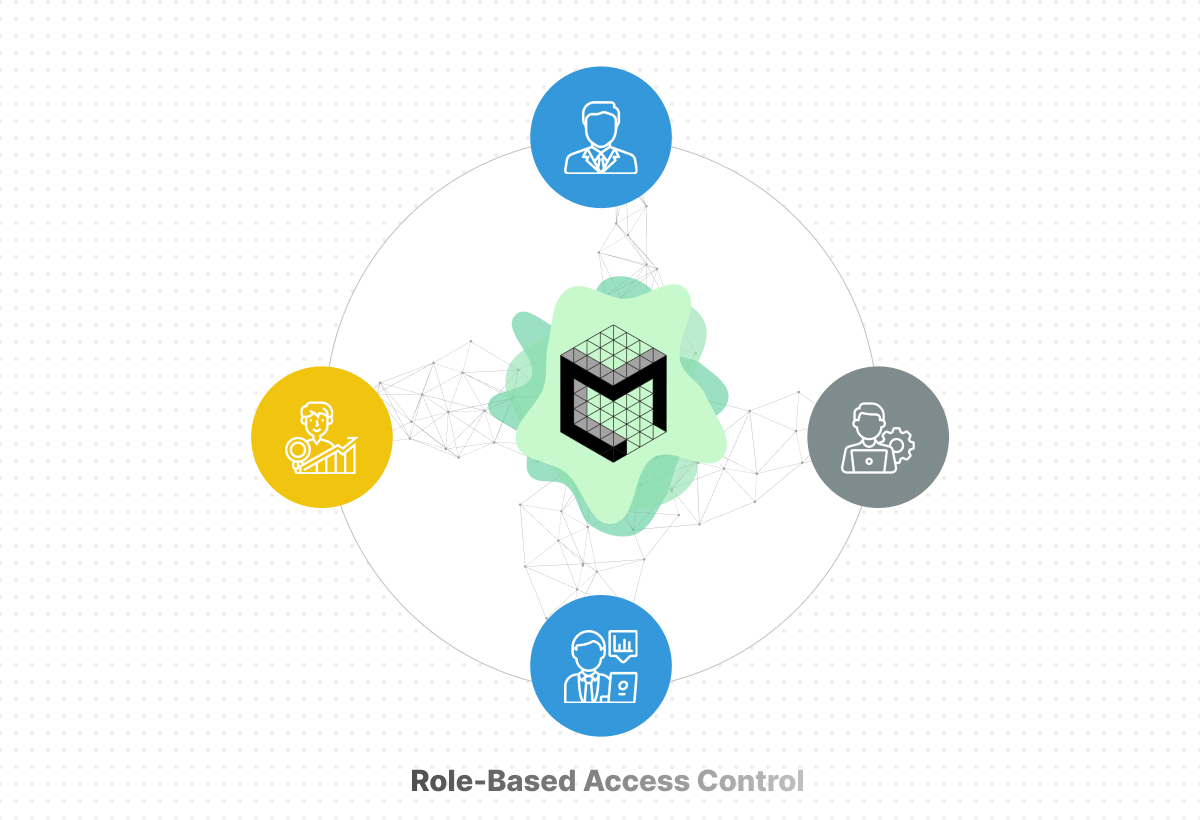
Access management is equally critical. In enterprise environments, not every team member should have visibility into every AI workflow, the underlying model configurations, or the data sources used for retrieval. Role-based access controls, audit logging, and storage-level encryption form the compliance backbone that auditors and security teams require.
Compliance as an Architectural Foundation
SOC2 and ISO 27001 compliance aren't features to be bolted on after deployment - they need to be architectural foundations. Organizations that treat governance as an afterthought inevitably face expensive retrofits or, worse, production incidents that erode trust far faster than any AI efficiency gain can build it.
The AI stack that wins in enterprise is the one that leadership, legal, and security teams can confidently stand behind.