
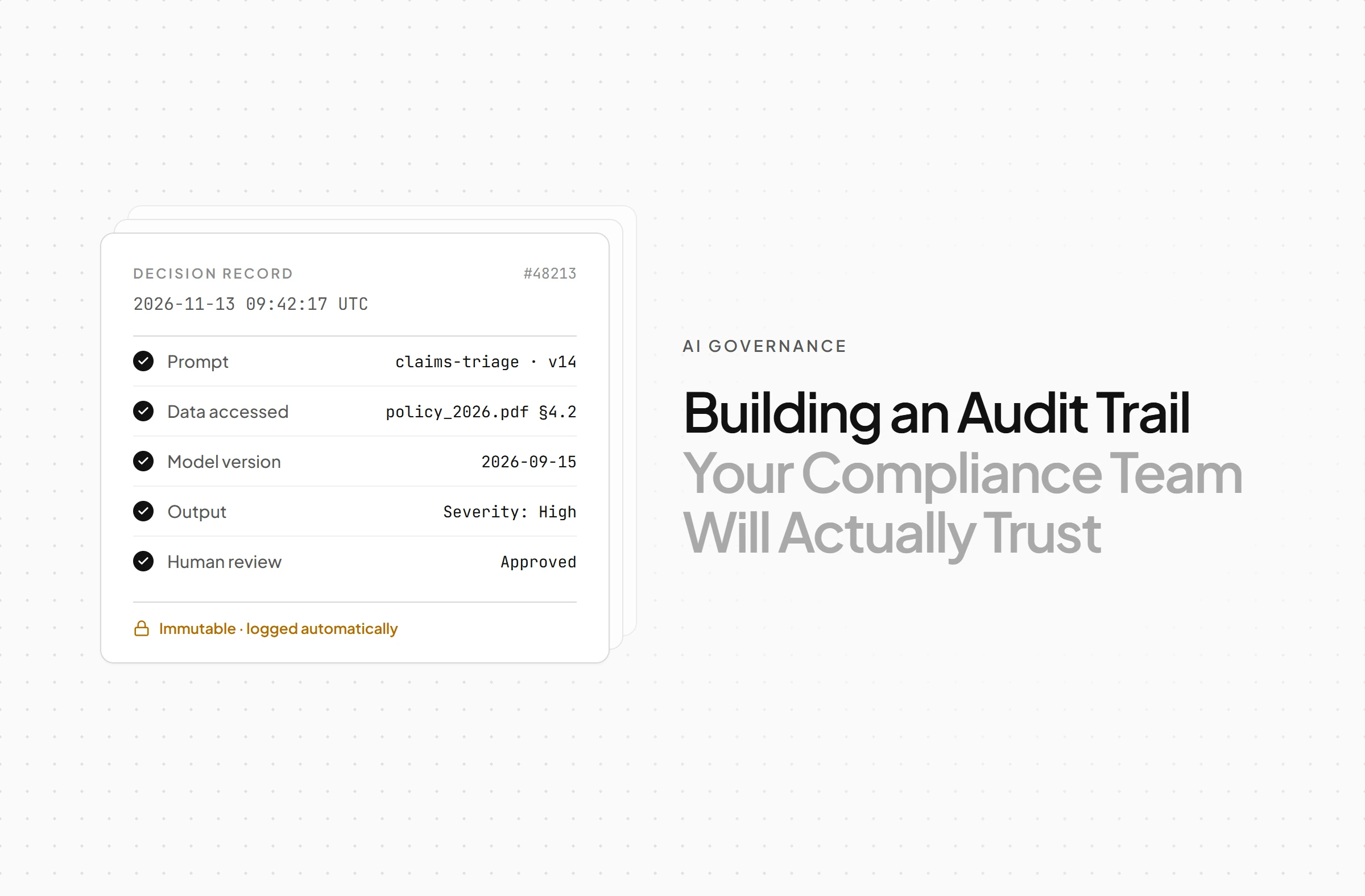
Compliance teams have a well-earned instinct for skepticism toward new technology, and AI has done little to change that. Their concern isn’t usually whether an AI system can perform a task well. It’s whether, six months from now, anyone can reconstruct exactly what it did and why, when a regulator, auditor, or customer asks. Most AI deployments currently fail that test, not because the technology is incapable of supporting it, but because nobody built the logging in from the start.
A genuine AI audit trail needs to capture a specific, complete set of information for every meaningful decision: the exact prompt or instruction the model received, any data or documents it had access to at the time, the model version that generated the response, the actual output, and whether a human reviewed, approved, or overrode that output. Missing any one of these pieces creates a gap that becomes very hard to fill retroactively, since you can’t reconstruct what a model saw after the fact if you didn’t capture it at the time.
The reason most systems don’t capture this by default comes down to how they were built. A team that connects directly to a model provider’s API, or strings together AI tools with custom scripts, typically isn’t thinking about audit requirements while racing to get a demo working. Logging gets treated as a nice-to-have to add later. Later rarely comes, because retrofitting comprehensive logging onto a system already running in production is disruptive and easy to keep deprioritizing.
The organizations that get this right build the audit layer in from day one, as a foundational requirement rather than a feature request. Every call to a model gets logged automatically, not selectively. Logs are immutable, meaning nobody, including well-meaning engineers debugging an issue, can quietly edit history after the fact. Retention periods are defined deliberately based on the specific regulatory context rather than left as an afterthought, since some industries have very specific documentation retention requirements. And critically, the logs are structured to be genuinely reviewable by a compliance officer without engineering help, not buried in raw technical output only a developer can parse.
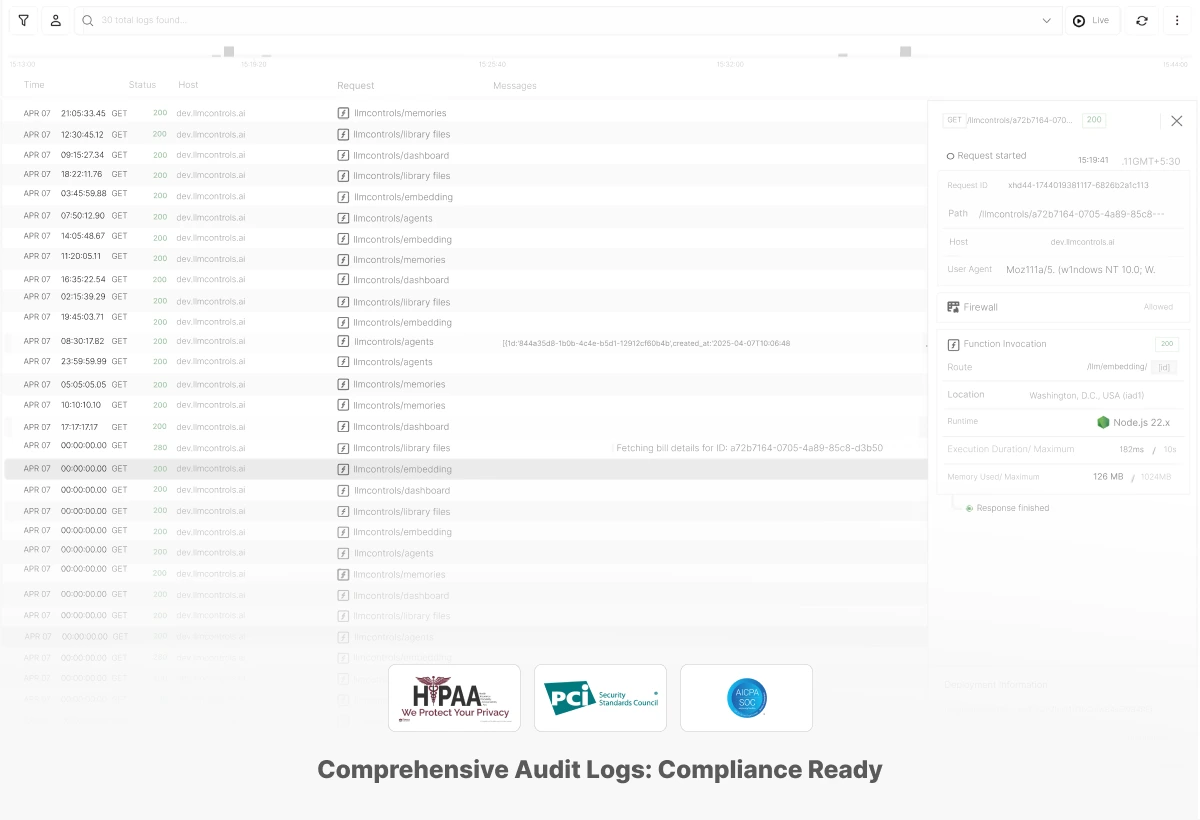
The payoff is concrete and shows up in exactly the moments it matters. When a customer disputes an automated decision, the actual reasoning is retrievable in minutes rather than requiring a reconstruction from memory. When a regulator asks how a specific number in a report was generated, there’s a documented, defensible answer instead of an educated guess. When an internal review finds a pattern of errors, it can be traced to a specific prompt version or model update, fixed at the source, and verified as actually resolved rather than assumed fixed.
We’ve seen this compress compliance timelines dramatically in practice: full audit trail coverage from the first day of deployment, tied to a real regulatory review process, cutting what would typically be a multi-month retroactive documentation exercise down to a matter of weeks. The audit trail wasn’t a compliance tax slowing the project down. It’s what let the deployment clear review at all.
If your organization is deploying AI into anything touching a regulated decision or a customer commitment, the audit trail isn’t a feature to prioritize later in the roadmap. It’s a prerequisite, and it’s dramatically cheaper to build in from the start than to retrofit after the fact.