
Every large language model available today, including the most capable ones from every major provider, will occasionally generate a confident, well-formatted, entirely wrong answer. This isn’t a flaw specific to one vendor that a future update will quietly fix. It’s a structural consequence of how these models work: they’re trained to produce the most statistically plausible next piece of text, not to know when they don’t actually know something. Believing the next model release will solve this is a comfortable assumption and a costly one.
That reframing matters because it changes what you build. If hallucination were a bug, the fix would be waiting for a patch. Since it’s a structural property, the fix has to be architectural: build systems that assume the model will sometimes be wrong, and catch that before it causes damage, rather than systems that trust the model’s output by default.
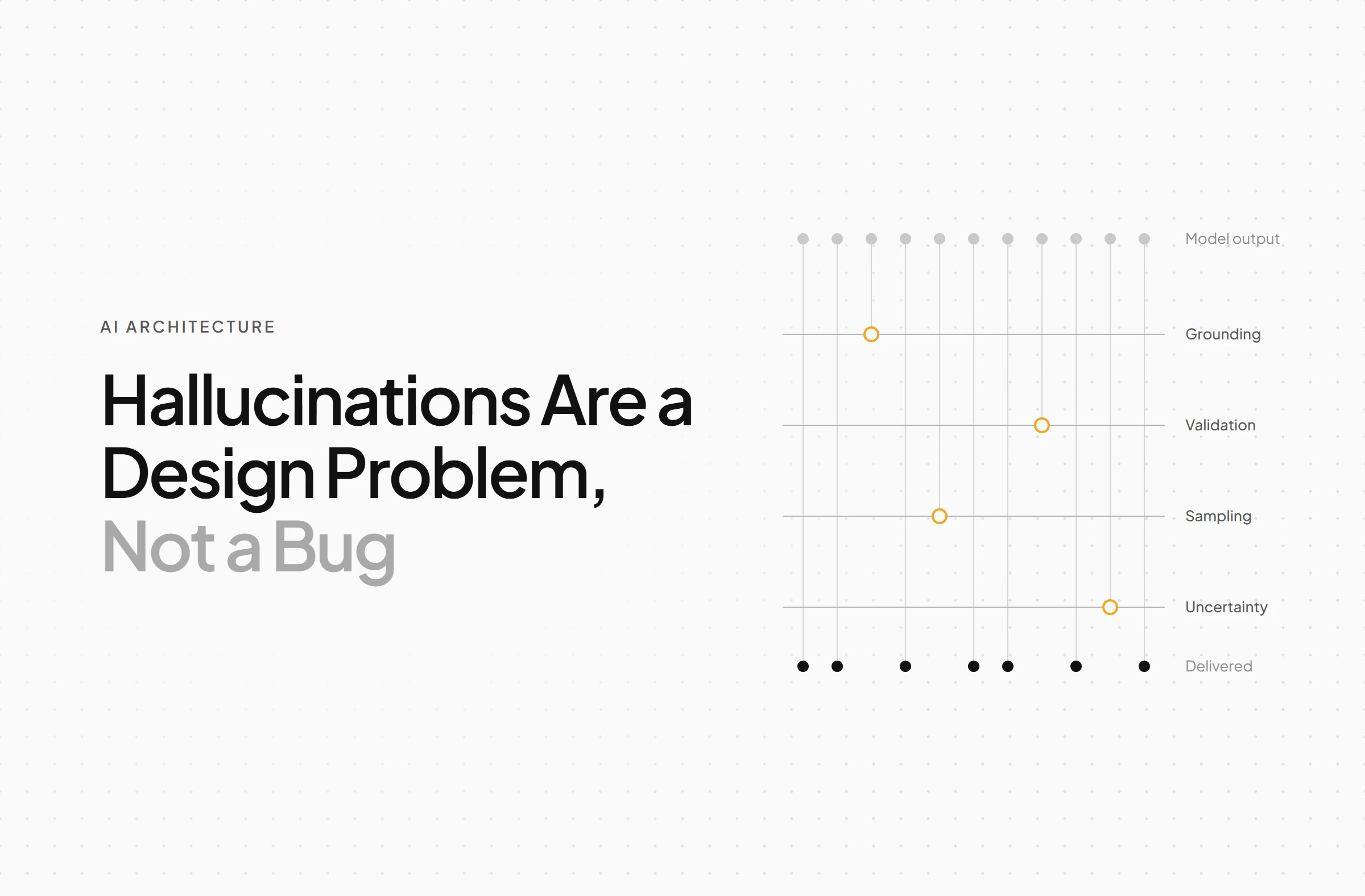
In practice, that means several concrete layers, not a single silver-bullet solution.
Grounding reduces the frequency of the problem at the source. A model answering purely from its training data is guessing at facts it might not actually have. A model that’s required to retrieve relevant information from your actual documents and answer only from that retrieved content hallucinates far less, because it has real material to work from instead of pattern-matching from memory. This is the core idea behind retrieval-augmented generation, and it’s the single highest-leverage change most teams can make to reduce ungrounded answers.
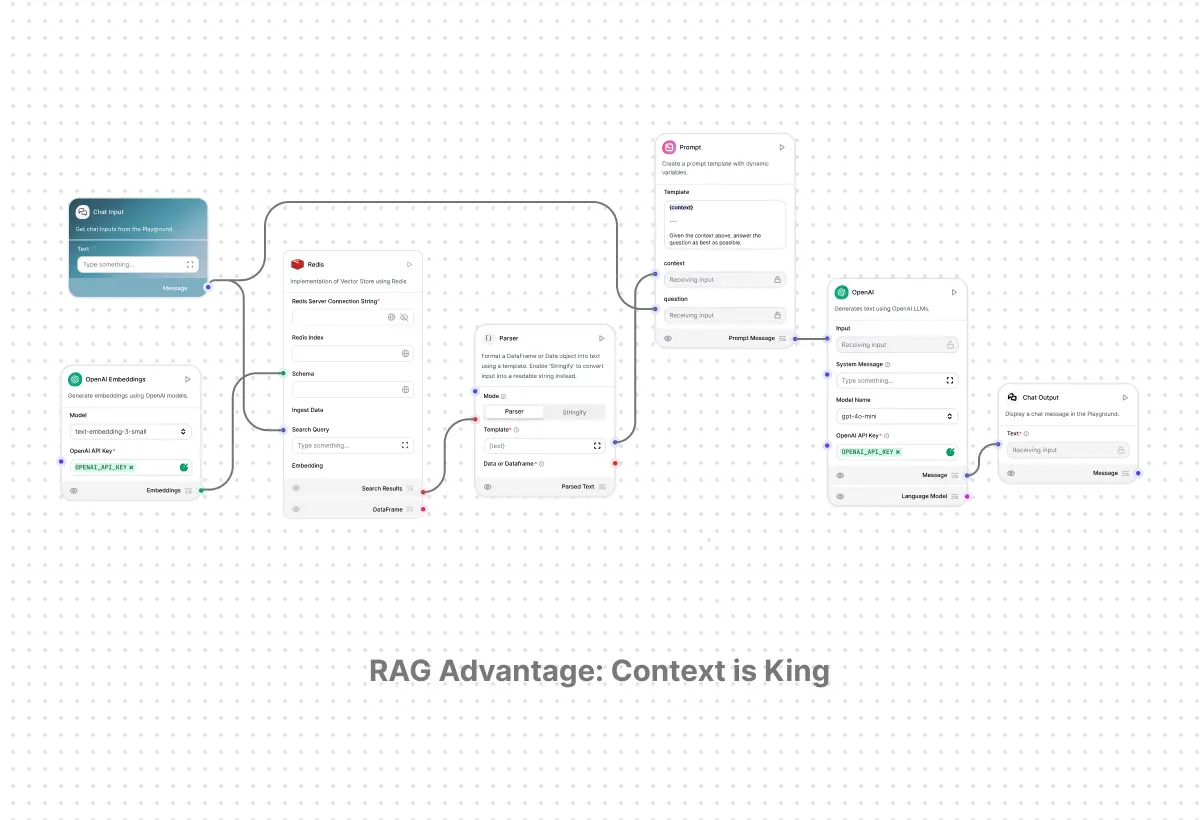
Validation catches what grounding misses. After the model generates an answer, a second pass, whether that’s a rules-based check, a second model reviewing the first model’s output, or a structured format that’s easier to verify programmatically, can catch outputs that don’t hold up before they go anywhere. This is meaningfully different from just asking the model to double-check itself, which tends to produce confident agreement rather than genuine scrutiny.
Sampling and monitoring catch what validation misses. No automated check is perfect, so a human reviewing a defined percentage of outputs, with the ability to escalate concerning patterns, is a permanent part of a well-run system rather than a temporary training-wheels phase you graduate out of.
Explicit uncertainty design matters more than most teams initially plan for. A model can be prompted and structured to say “I don’t have enough information to answer confidently” rather than guessing, and a system that logs confidence scores can flag low-confidence answers for review automatically, before a customer ever sees them.
None of these layers is optional if there’s a hallucination on the other end that would actually cost you something: a compliance violation, a customer relationship, a financial number in a report. And none of them require waiting for a fundamentally better model to arrive. A well-designed system built on today’s models, with real grounding, validation, and monitoring, will produce far more reliable results in production than a poorly architected one built on next year’s more capable model.
The uncomfortable but useful truth: hallucination isn’t something you’re waiting to be fixed for you. It’s something you architect around, starting now, with the models that already exist.