
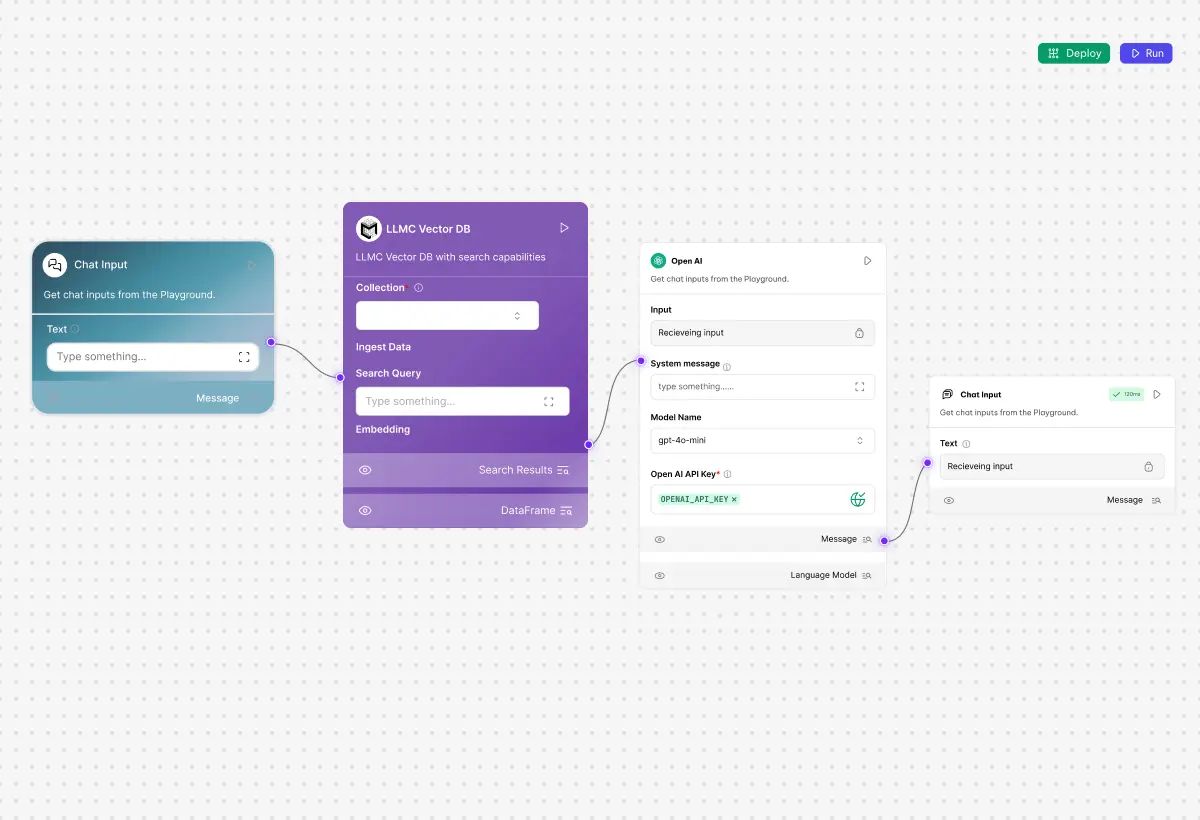
Enterprise AI adoption is rarely uniform. Within a single organization, you'll find AI Automation Engineers who want full programmatic control over pipeline logic, department leads who need to configure and deploy workflows without writing code, and everyone in between. A platform that only serves one of these personas creates adoption friction - and adoption friction kills AI programs.
The Architectural Challenge
The architectural challenge is building a workflow composer that doesn't force a tradeoff. No-code interfaces that are genuinely powerful - not just drag-and-drop wrappers around limited functionality - require a robust underlying abstraction layer. That same abstraction layer needs to be fully programmable for engineers who need to implement custom logic, handle edge cases, or integrate with non-standard data sources.
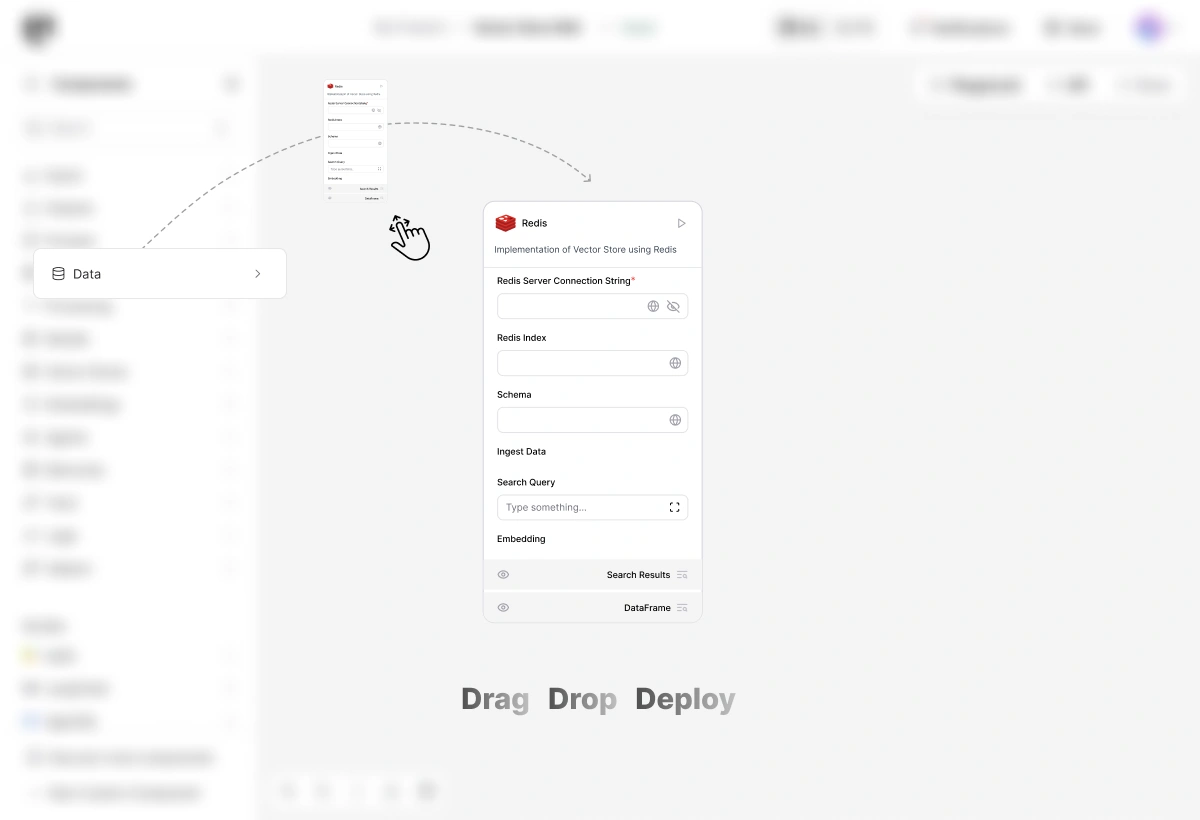
Template Libraries Accelerate Deployment for Both Audiences
Template libraries accelerate deployment for both audiences. For non-technical users, templates provide a starting point that handles the structural complexity of workflow design - prompt chaining, retrieval configuration, validation steps - so they can focus on the domain-specific configuration their use case requires. For engineers, templates serve as reference implementations that can be forked and extended rather than built from scratch.
Integration and Deployment
Integration and deployment are equally important. A workflow composer is only as useful as the data it can access and the environments it can deploy to. Diverse data connectors - spanning common enterprise databases, document management systems, and APIs - eliminate the manual data pipeline work that often delays AI project timelines. One-click deployment to hosted infrastructure removes the DevOps overhead that slows iteration cycles.
A Platform That Grows With the Organization
The result is an AI platform that grows with the organization - approachable enough for early adopters, flexible enough for advanced implementations, and scalable enough for enterprise-wide rollout.