
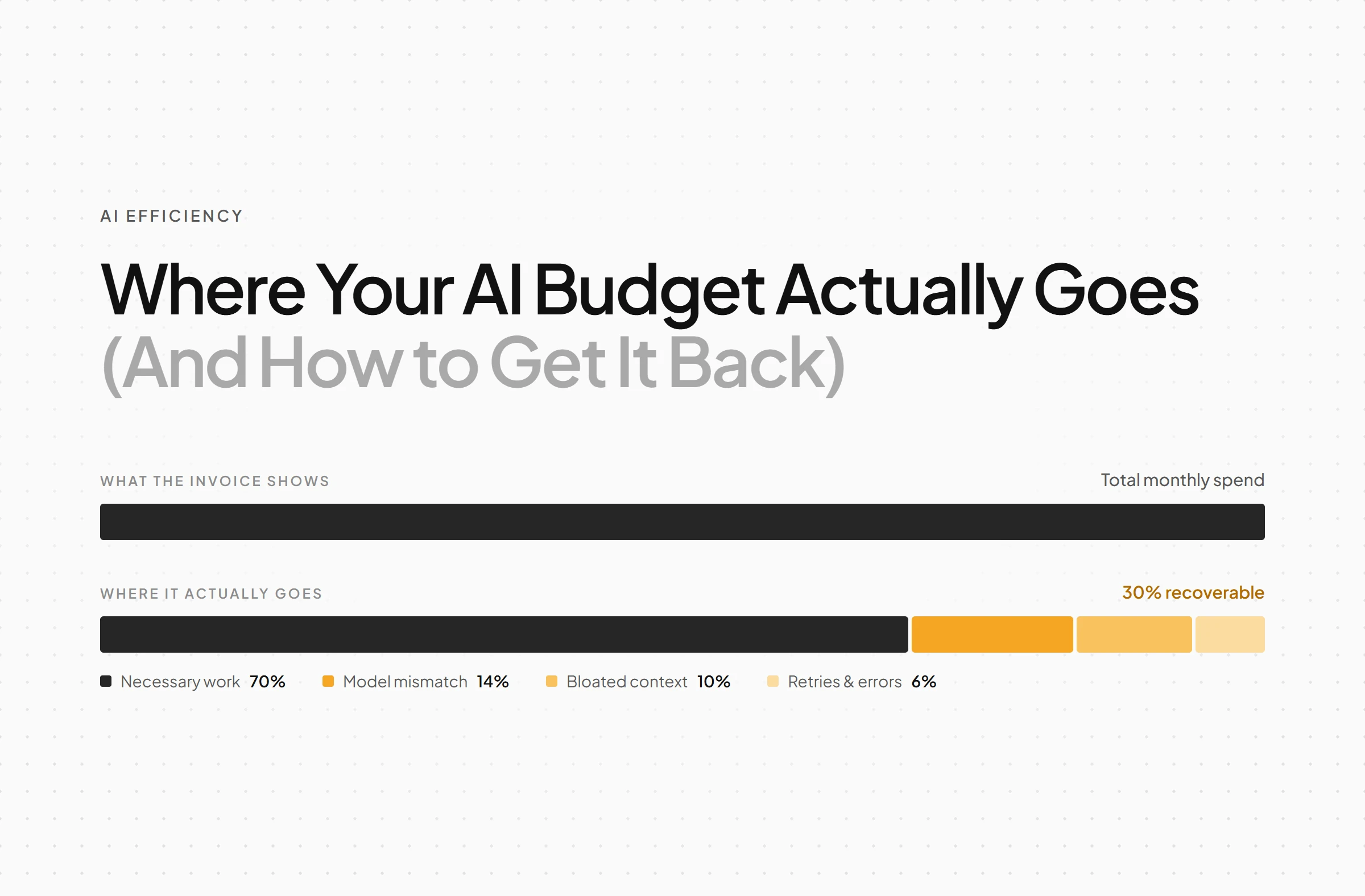
The first unpleasant surprise for most companies scaling up AI usage isn’t a technical failure. It’s the invoice. A workflow that cost a reasonable amount during testing suddenly costs several times more once real usage kicks in, and figuring out why requires more visibility than most teams have built.
Four patterns account for the overwhelming majority of runaway AI spend, and all four are fixable once you know to look for them.
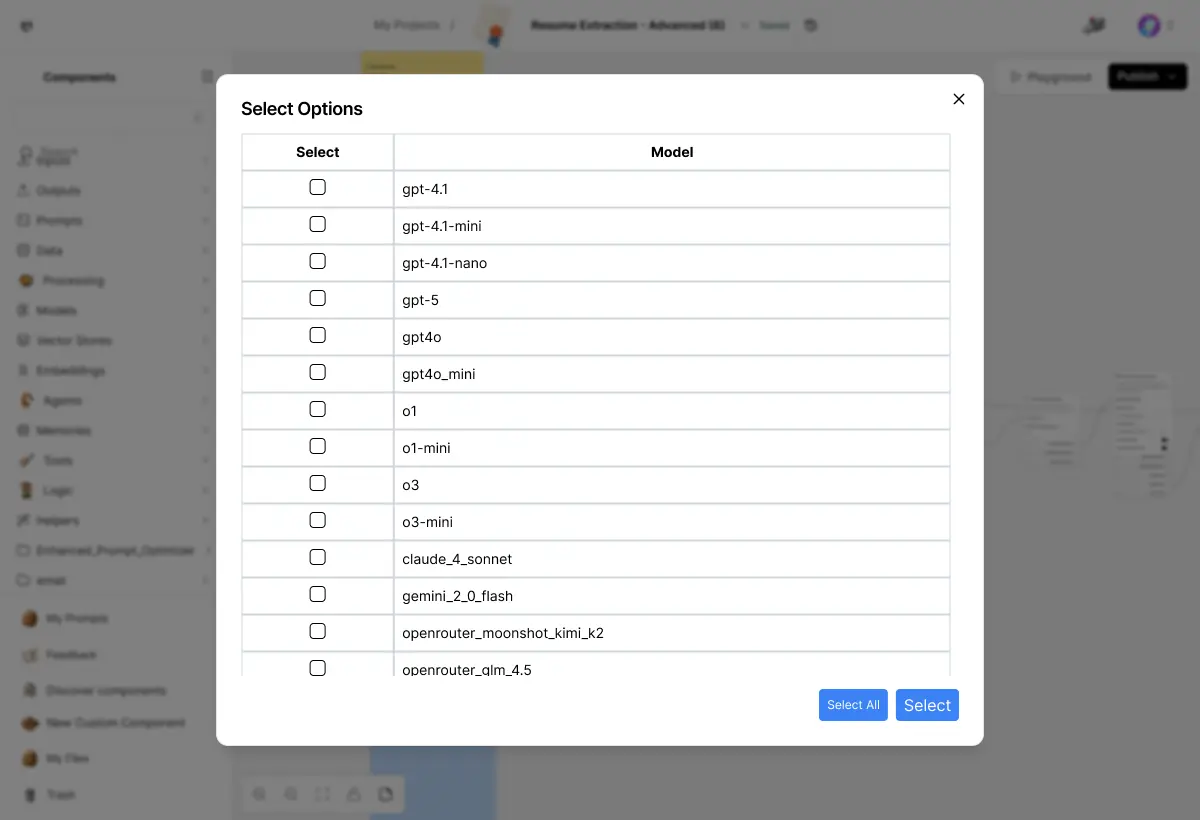
The first is model mismatch: using an expensive, general-purpose frontier model for a narrow task that a smaller, cheaper model handles just as well. Classifying a support ticket by urgency doesn’t need the same model as drafting a complex legal analysis, but plenty of production systems use the same top-tier model for everything, because it was the default when someone first built the workflow and nobody has revisited the decision since.
The second is bloated context. Every additional word sent to a model costs money on every single call, and it’s easy for a workflow to accumulate unnecessary background information, entire documents included as context when only a paragraph is relevant, conversation history retained far longer than it needs to be, boilerplate instructions repeated on every request instead of being handled once. Trimming this down often reduces both cost and, counterintuitively, improves accuracy, because a shorter, more focused prompt gives the model less irrelevant material to get distracted by.
The third is retry and error waste. When a call fails or returns something unusable, systems often retry automatically, sometimes several times, and every retry is billed the same as a successful call. Without monitoring, these retries are invisible in the top-line number and can represent a meaningful share of total spend.
The fourth, and the one that compounds the other three, is the simple absence of visibility. Most teams see one number: total monthly spend. They don’t see cost broken down by workflow, by model, or by time period, which means an expensive process hiding inside a larger system can go unnoticed for months.
The fix mirrors how any other significant operating cost gets managed. Instrument spend at the level of individual workflows, not just a company-wide total, so a specific expensive process is visible rather than buried in an aggregate. Route by task complexity rather than defaulting to the most powerful available model, reserving frontier models for the genuinely hard cases and sending routine work to cheaper alternatives. Set usage alerts and hard caps so a runaway process gets caught in hours, not discovered a month later on an invoice. And treat prompt and context length as a cost lever worth optimizing on its own, the same way you’d optimize any other recurring expense.
Done properly, this typically nets a meaningful reduction in AI spend, in our experience often in the range of a quarter to a third, without any reduction in output quality, because the savings come from eliminating genuine waste rather than cutting corners. The bigger opportunity sits further out: for workflows at real scale, moving well-defined, repetitive tasks from frontier models to properly tuned open-source alternatives can cut the cost of those specific tasks by 20 to 50 times while retaining the large majority of output quality.
None of this requires guessing less. It requires measuring more, at a finer level of detail than most companies currently bother to track.